Introduction
An AI Receptionist has emerged as a powerful solution for managing customer interactions efficiently and effectively. By combining artificial intelligence, machine learning, and voice automation technologies, AI receptionists can answer calls, route inquiries, schedule appointments, and provide support around the clock. These intelligent systems help businesses improve customer service while reducing operational workloads.
More and more solutions with an AI call assistant plus automated phone call management are shifting how businesses talk with customers. A lot of AI receptionist reviews mention that once companies plug in AI-driven communication tools, they start seeing better efficiency, smoother conversations, and lower operating costs, kind of across the board, you know.
Understanding AI Receptionists
How AI Receptionists Work
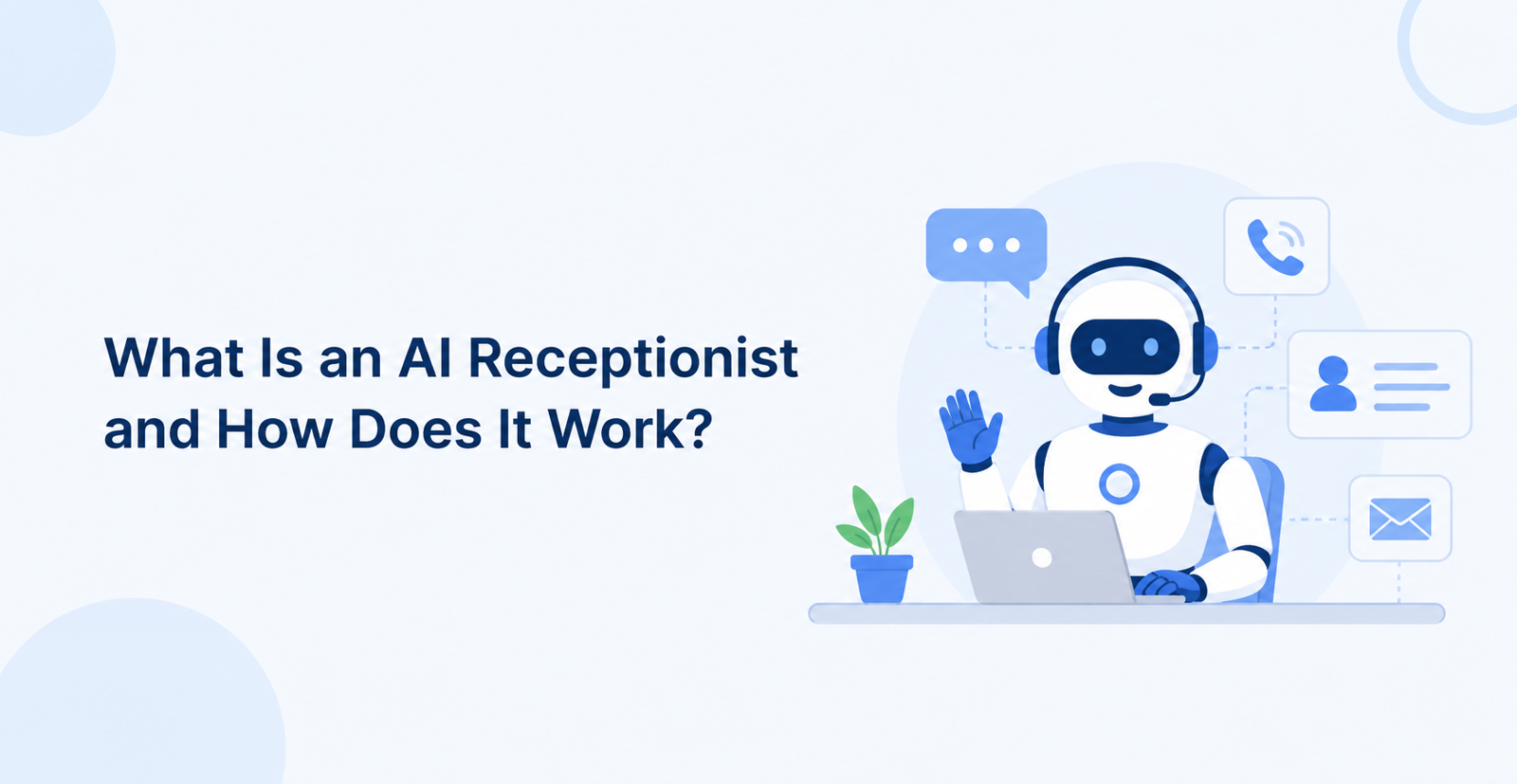
An AI receptionist is basically a digital helper, powered by artificial intelligence, that can manage customer communication pretty much on its own.
When an AI phone call comes in, the system listens first then figures out what the customer is saying, identifies what they really need, and answers in a matching way. Compared with older automated options that leaned hard on fixed menu choices, AI receptionists can understand natural language in a looser, freer way.
AI Call Assistant and Automated Voice Systems
The AI call assistant is usually the central brain inside most AI receptionist platforms, and yeah, basically everything routes through it.
Automated voice systems help businesses handle higher call volume without constantly adding headcount. Customers get responses faster, and companies can keep service expectations stable at least in theory.
Core Technologies Behind AI-Powered Customer Interactions
Machine Learning and Predictive Analytics
Machine learning enables AI receptionists to improve continuously through experience.
By analyzing customer interactions and communication patterns, AI systems learn how to provide more accurate responses and better customer support. Predictive analytics helps identify customer needs and anticipate potential issues before they arise.
Voice Recognition and Security Systems
Voice recognition technology enhances both customer convenience and communication security.
AI receptionists can identify customers through unique vocal characteristics, enabling secure authentication without requiring passwords or security questions. This capability is particularly useful in industries that handle sensitive customer information.
Cloud-Based Communication Infrastructure
Cloud infrastructure gives AI receptionist tools the room they need to scale up, especially when call volume spikes, or sometimes when it and yeah it can swing pretty fast, out of nowhere again.
That elasticity helps keep the customer experience more stable, even when demand feels unpredictable, like the system is following its own internal rules without someone staring at dashboards all day.
Key Features of AI Receptionist Systems
Automated Call Routing
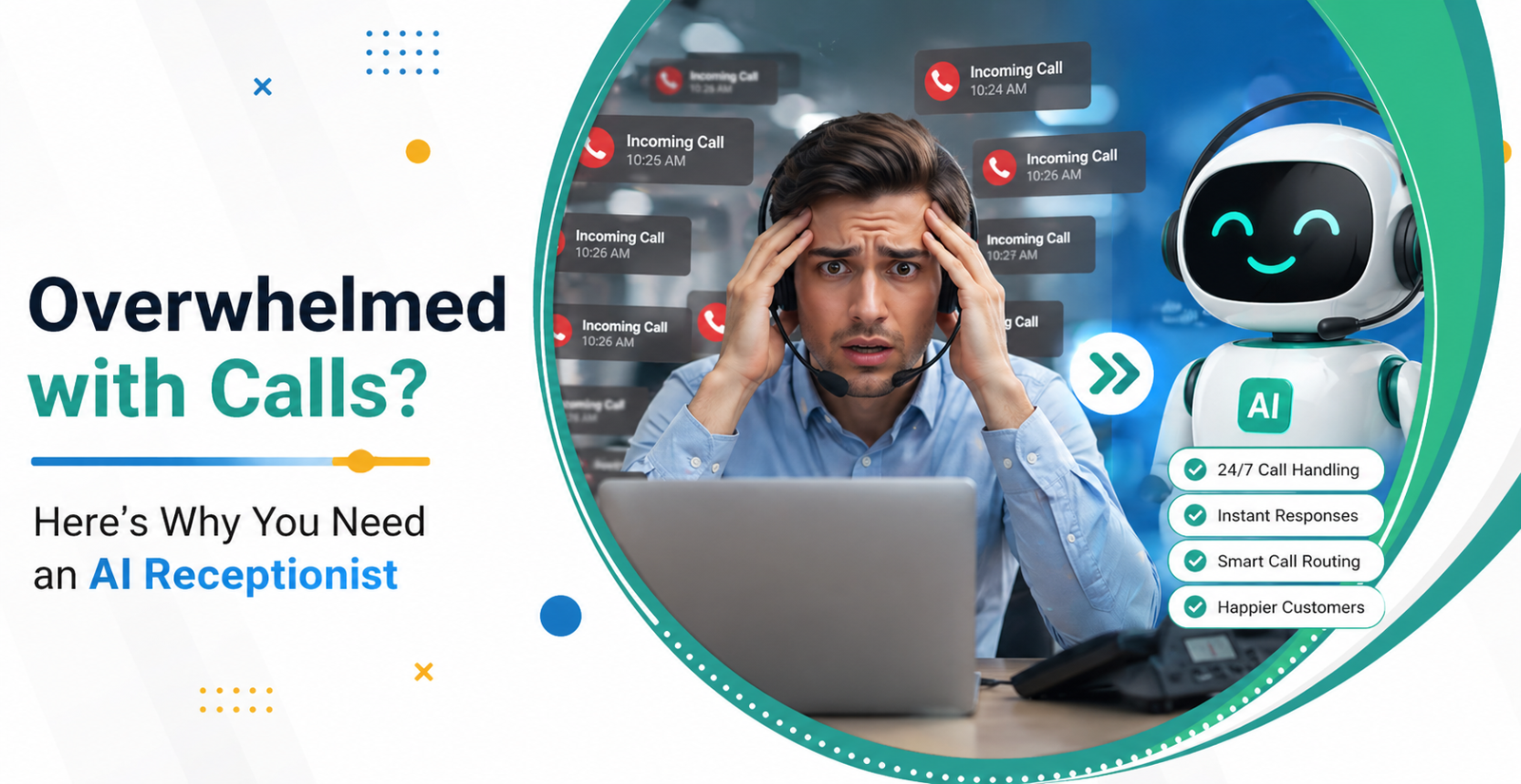
AI receptionists analyze caller intent and automatically route calls to the appropriate department, representative, or specialist. This minimizes unnecessary transfers and reduces customer frustration.
AI Phone Call Management
AI phone call management automates a lot of the everyday communication work that humans used to handle manually.
The AI call assistant executes these tasks with steady accuracy, so organizations can increase efficiency without weakening service quality.
And since automation reduces admin workload, employees can spend more time on higher value activities, instead of burning the whole day repeating the same basics over, and over like a loop.
Real-Time Data Processing and Analytics
AI receptionists can process customer details along with communication data in real time.
So businesses can follow interactions while they’re happening, spot recurring trends sooner, and make decisions based on real evidence, not guesswork or gut feelings. Real time analytics also improves visibility into customer behavior, service outcomes, and how the overall communication experience plays out in practice.
How AI Receptionists Optimize Customer Interactions
Personalized Customer Communication
AI receptionists leverage customer data, communication history, and behavioral insights to deliver tailored interactions. Personalized communication helps customers feel understood and valued.
Smart Call Routing and Efficient Support
AI-powered routing ensures customers receive assistance from the most appropriate resource quickly.
By understanding customer intent, AI receptionists eliminate unnecessary transfers and streamline communication workflows. Customers experience faster resolutions and improved service quality.
Automated Workflow and Task Management
AI receptionists can take on a lot of the admin grind plus those repetitive communication things that just drag on.
So employees spend less time answering the same questions again and again , handling the same scheduling, doing the same followups , and more time on the tougher parts, the stuff customers actually need.
Benefits of AI Receptionists for Businesses
Increased Productivity and Efficiency
AI communication tools can deliver a noticeable boost to productivity across the whole organization, kinda like there’s this extra quiet engine running in the background all the time
There’s also a more practical angle here: a company can manage larger conversation volumes without needing to scale headcount in the same exact way.
24/7 Customer Communication Support
AI receptionists don’t clock out, they don’t ask for breaks, and there’s no awkward shift handoff either , so there’s less downtime that human teams sometimes run into
So customers can get help whenever it lines up with what they’re dealing with, even outside normal business hours, or across different.
This always-on support is honestly more helpful than people expect,and it also reduces the chance that messages sit around unanswered which is pretty common.
Scalability for Business Growth
AI receptionist systems can expand pretty smoothly as customer volume increases , and also when interaction volume.
Businesses can keep service quality steady , without stacking costs in some huge sudden jump.
Industry Applications of AI Receptionists
Healthcare and Medical Support
In healthcare, AI receptionists manage appointment scheduling, handle common patient questions, send reminders, and smooth out those administrative workflows.
Patients often get quicker access to the details they need, and the entire communication experience feels more consistent, less random.
Meanwhile healthcare professionals get more room to focus on patient care, while the AI takes care of the “paperwork style” component.
Retail and E-Commerce
Retailers rely on AI powered communication for product questions, order tracking, returns, and support requests.
These AI receptionists let retailers absorb seasonal demand surges, while still keeping service quality pretty stable even when things feel chaotic.
Travel and Hospitality
In travel and hospitality, AI receptionists support reservations, booking confirmations, travel updates, and guest related questions.
Guests usually receive fast, useful answers while they’re on the move, from early planning through the moment they arrive, check in, and need clear next steps for their itinerary.
Future Trends in AI Receptionist Technology
Advanced Conversational AI
Future AI receptionists will engage in increasingly sophisticated conversations.
Advancements in conversational AI will improve contextual understanding and enable systems to handle complex customer inquiries naturally and effectively.
Human AI Collaboration
The future of customer service will involve collaboration between AI systems and human employees.
AI receptionists will manage routine communication tasks while human representatives focus on situations requiring empathy, creativity, and complex decision-making.
Autonomous AI Customer Interaction Systems
Next-generation AI receptionists will become increasingly autonomous.
These systems will manage entire communication workflows, resolve routine issues, conduct follow-ups, and coordinate customer interactions with minimal human oversight.
Autonomous customer interaction systems will significantly improve scalability and operational efficiency.
Conclusion
The AI Receptionist is reshaping how businesses manage customer communication, by adding smart support that’s both fast and scalable. Through machine learning, voice recognition, cloud infrastructure, and automation working together, these systems help organizations deliver service in a smoother manner, and usually improve operational performance as well.
With AI Call Assistant driven solutions, paired with automated AI phone call management systems, companies can offer help that feels more tailored, lowers costs, and often leads to better customer satisfaction. Also, if you quickly scan through a stack of AI Receptionist Reviews, there’s typically the same storyline: organizations that roll out AI powered communication tools often report real wins in productivity, efficiency, and customer engagement.




Write a comment ...