
Introduction
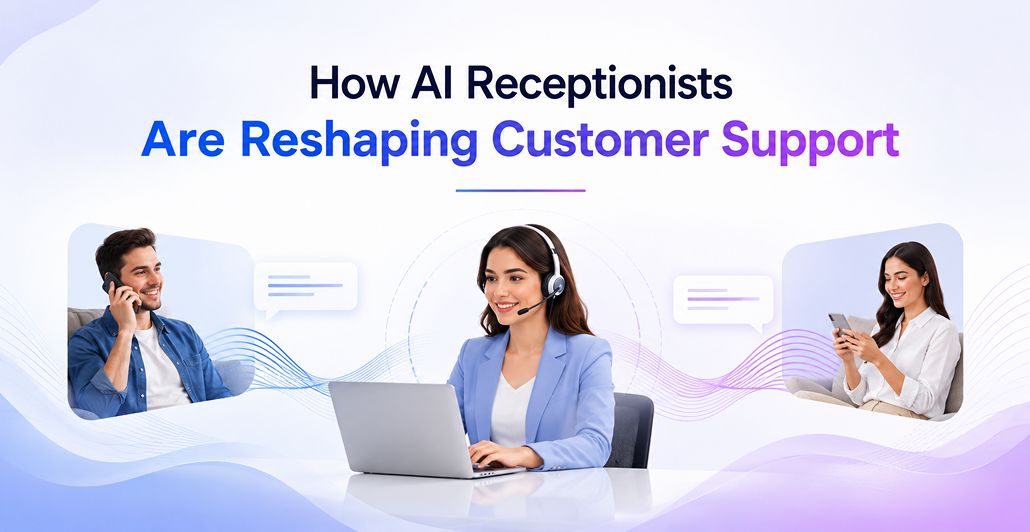
An AI Receptionist is transforming customer communication by automating interactions using advanced artificial intelligence technologies. AI-powered systems help businesses streamline communication workflows, improve operational efficiency, and enhance customer experiences. Technologies such as the AI Call Assistant and automated AI Phone Call systems allow businesses to manage customer interactions intelligently and efficiently. Many AI Receptionist Reviews highlight how AI-driven communication systems improve productivity, reduce operational costs, and deliver better customer engagement.
Understanding AI Receptionists
How AI Receptionists Work
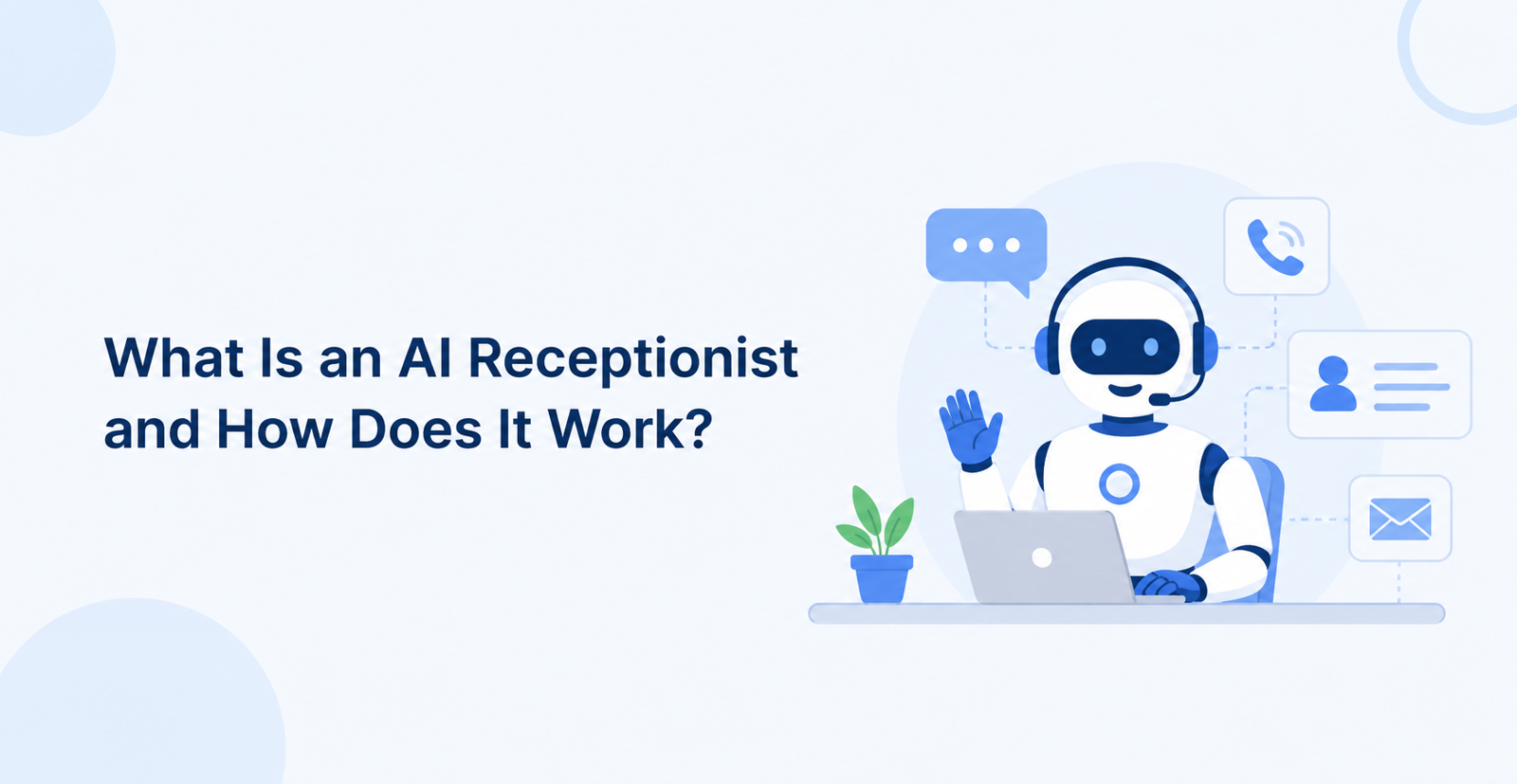
An AI Receptionist uses artificial intelligence, speech recognition, and machine learning technologies to automate customer communication tasks.
When a customer initiates an AI Phone Call, the system captures voice input, analyzes customer intent, and generates appropriate responses in real time. AI systems can answer questions, transfer calls, schedule appointments, and provide information without requiring human intervention.
AI Call Assistant and Automated Voice Systems
The AI Call Assistant is a vital component of modern AI-powered communication platforms. It automates repetitive tasks such as appointment scheduling, customer reminders, order updates, and follow-up calls.
Automated voice systems ensure customers receive consistent support 24/7 while reducing workloads for customer service teams. Businesses can also use outbound AI Phone Call systems to proactively communicate updates, promotions, and service notifications.
Core Technologies Behind AI Receptionists
Natural Language Processing (NLP)
Natural Language Processing enables AI systems to understand and interpret human language effectively.
NLP allows the AI Receptionist to recognize customer intent, analyze conversations, and provide natural, human-like responses that improve customer engagement.
Machine Learning and Predictive Analytics
Machine learning helps AI systems get better over time, picking up conversation habits and customer behavior step by step , little by little basically.
Predictive analytics helps businesses guess what a customer might need next, adjust support workflows, and send messages that feel more personalized. Better timing, better results. Not magic, but it feels smooth, yeah pretty smooth.
Voice Recognition and Security
AI systems can recognize customer voices, verify identities in a more secure way, and guide the conversation using past communication history alongside existing preferences. It’s like a tailored route, without going fully creepy, for anyone who’s nervous about that kind of thing.
Cloud-Based Communication Infrastructure
Cloud based communication infrastructure gives scalability, flexibility, and reliability for AI communication services.
In plain terms, businesses can manage customer interactions from almost anywhere, scale communication operations up without the big headaches, and pull conversation data in real time, instead of dealing with setup costs that just sit there collecting dust.
Key Features of AI Receptionist Systems
Intelligent Call Answering
An AI Receptionist can answer incoming calls fast, and offer help right away.
This reduces waiting time, and helps customers get support when they call, not 2 hours later, give or take depending on the day.
Automated Call Routing
AI powered systems can interpret what the customer needs, then route the call to the correct department or representative automatically.
That improves efficiency, cuts unnecessary transfers, and usually lifts customer satisfaction too.
AI Phone Call Management
AI Phone Call management automates both inbound and outbound communication activities.
Supported by the AI Call Assistant, businesses can efficiently manage appointment reminders, customer inquiries, support notifications, and follow-up communication.
Real-Time Data Processing and Insights
AI receptionists process customer interaction data in real time to generate valuable insights.
Businesses can monitor customer behavior, analyze communication trends, and improve support strategies based on data-driven decision-making.
Multichannel and Multilingual Support
Modern AI systems can communicate across voice calls, email, live chat, messaging apps, and a few other channels depending on the platform.
Multilingual support lets businesses help customers across regions and language groups in a useful way, even when the internal team isn’t bilingual, or not fully fluent anyway.
How AI Receptionists Automate Customer Interactions
Smart Call Routing and Efficient Handling
AI-powered communication systems intelligently analyze customer intent and route calls to the correct department or support agent.
Automated Workflow and Task Management
AI systems automate repetitive administrative tasks such as scheduling, ticket generation, reminders, and follow-up communication.
Proactive Customer Support and Follow-Ups
AI-powered systems can proactively engage customers through reminders, service updates, appointment confirmations, and personalized notifications.
Benefits of AI Receptionists for Businesses
Increased Productivity and Efficiency
An AI Receptionist automates repetitive communication tasks, reducing workloads for support teams.
Businesses can improve productivity by allowing employees to focus on strategic responsibilities while AI systems manage routine customer interactions.
Reduced Operational Costs
Automation reduces the need for large customer support teams and lowers communication management expenses.
24/7 Customer Interaction Support
AI-powered communication systems provide continuous customer support without interruption.
Customers can receive assistance at any time, improving customer satisfaction and ensuring global service availability.
Industry applications of AI receptionists
Healthcare and medical support
Healthcare organizations use AI receptionists for appointment scheduling, patient reminders, prescription notifications, and medical support inquiries.
Telecommunications
Telecommunication companies use AI systems to manage customer inquiries, billing support, technical assistance, and service updates.
Travel and hospitality
Travel and hospitality businesses use AI receptionists for booking confirmations, itinerary updates, reservation management, and customer support.
Challenges in Implementing AI Receptionists
Integration with Existing Systems
Integrating AI receptionists with existing CRM platforms and communication systems can be technically complex.
Businesses must ensure seamless data synchronization and reliable system compatibility during implementation.
Data Privacy and Security Concerns
AI systems process large amounts of sensitive customer information, making security and privacy major concerns.
Accuracy and Language Limitations
Although AI technologies continue to improve, some systems may still struggle with regional accents, complex language structures, or unclear speech patterns.
Customer and Employee Adoption
Some customers and employees may initially hesitate to trust AI-powered communication systems.
Businesses should provide proper training and educate users about the benefits of AI automation to encourage adoption and confidence.
Future Trends in AI Receptionist Technology
Advanced Conversational AI
Future AI Receptionist systems will become more conversational, intelligent, and human-like.
Emotion Recognition in Voice Systems
This capability will help businesses provide more empathetic and personalized customer support experiences.
Human-AI Collaboration
AI systems will handle repetitive communication tasks while human agents focus on complex situations requiring empathy and problem-solving skills.
Hyper-Personalized Customer Interactions
Future AI systems will use predictive analytics and behavioral insights to deliver highly personalized communication experiences tailored to individual customer preferences.
Conclusion
The AI Receptionist is transforming customer communication by automating interactions and improving operational efficiency through advanced artificial intelligence technologies. Solutions such as the AI Call Assistant and automated AI Phone Call systems help businesses deliver faster, smarter, and more personalized customer experiences.
Insights from many AI Receptionist Reviews demonstrate how AI-powered communication systems improve productivity, reduce operational costs, and enhance customer satisfaction.





Write a comment ...